
Tennis Elbow: You Don’t Have to Play Tennis to Get It
You’ve probably heard of tennis elbow, but there’s a good chance you’ve never held a racket. Despite its sporty name, tennis elbow is one of the most common arm injuries seen in people who spend their days at a desk, on a job site, or doing repetitive tasks at home. If you’re dealing with nagging pain on the outside of your elbow that just won’t quit, you’re not alone, and you don’t need a serve or a backhand to understand why.
As an elbow specialist in West Babylon, Dr. Mikhail Zusmanovich sees patients every week who are surprised to learn their pain has a name, and even more surprised that effective treatment can get them back to work, back to the game, and back to life.
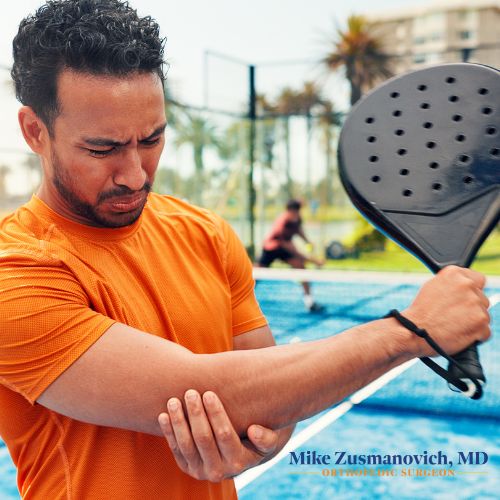
Tennis Elbow Treatment
Expert Elbow Care on Long Island. Dr. Mikhail Zusmanovich specializes in diagnosing and treating a wide range of elbow conditions with a focus on patient-centered care. Looking for an elbow specialist in West Babylon? Schedule an appointment with Dr. Zusmanovich today!
What Is Tennis Elbow, Exactly?
Tennis elbow, medically known as lateral epicondylitis, is a painful condition caused by overuse of the forearm muscles and tendons that attach to the lateral epicondyle, a bony bump on the outside of your elbow. Repeated stress causes tiny tears in the tendon, leading to inflammation, pain, and weakness.
The pain typically develops gradually. At first, it may only flare up when you grip something or twist your forearm. Over time, it can become a constant ache that makes even lifting a coffee mug feel like a challenge.
Who Really Gets Tennis Elbow? (Hint: Probably Someone Like You)
Only about 5% of tennis elbow cases are actually linked to playing tennis. The vast majority occur in everyday people doing everyday jobs. Here’s who we see most often:
Office Workers & Computer Users
Hours of typing, using a mouse, and gripping a phone place continuous, low-level strain on your forearm extensors. Over weeks and months, that repetitive motion adds up. If you work at a desk and notice outer elbow pain, your workstation setup, not a sport, is likely to blame.
Laborers, Tradespeople & Construction Workers
Carpenters, plumbers, electricians, and painters are among the most common tennis elbow patients. Repeated use of screwdrivers, hammers, paintbrushes, and wrenches, especially gripping and twisting motions, is a textbook setup for lateral epicondylitis. If you work with your hands for a living, this condition can threaten your livelihood.
Chefs, Cooks & Food Service Professionals
Chopping, stirring, and carrying heavy pots and pans create the same repetitive forearm strain. Many chefs develop tennis elbow without any awareness that their kitchen routine is the culprit.
Healthcare & Dental Professionals
Nurses, dental hygienists, physical therapists, and surgeons perform highly repetitive arm movements throughout their shifts. The fine, forceful motions involved can cause chronic tendon stress over time.
Musicians
Violinists, pianists, and guitarists who practice for hours at a time are susceptible to lateral epicondylitis. The sustained gripping and bowing motions produce the same tendon overload.
Weekend Warriors & Athletes (Yes, Including Tennis Players)
Tennis, pickleball, racquetball, squash, golf, and even weight training can contribute, especially when proper form is lacking or when someone ramps up activity quickly after a period of rest. Age also plays a role: tennis elbow peaks between ages 30 and 50.
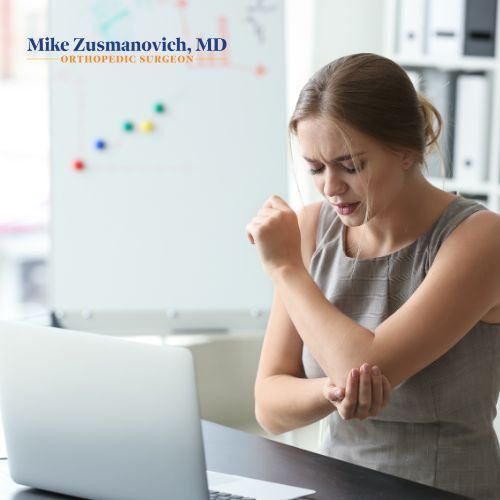
Recognizing the Symptoms of Tennis Elbow
The hallmark signs of tennis elbow include:
- Pain or burning in the outer part of your elbow
- Weakness in your grip, difficulty shaking hands, turning a doorknob, or opening a jar
- Pain that worsens when you extend your wrist or straighten your arm
- Soreness that radiates from the elbow into the forearm
- Stiffness in the morning or after periods of rest
- Discomfort that worsens with activities like typing, lifting, or using tools
It’s worth noting that not all elbow pain is tennis elbow. Golfer’s elbow (medial epicondylitis) affects the inner elbow; other conditions, such as bursitis, nerve entrapment, or arthritis, can cause similar symptoms. A proper evaluation by an orthopedic specialist is the only way to know for sure.
How Is Tennis Elbow Diagnosed?
Diagnosing tennis elbow is largely clinical, meaning it’s based on your symptoms, history, and a physical examination. Dr. Zusmanovich will assess the location and nature of your pain, evaluate your grip strength, and test specific movements that load the lateral epicondyle tendons.
In some cases, imaging may be used to rule out other causes or assess the degree of tendon damage:
- X-rays — to rule out arthritis, fractures, or bone spurs
- MRI — to evaluate soft tissue damage and the severity of tendon tears
- Ultrasound — a useful real-time tool for visualizing tendon changes
Treatment Options for Tennis Elbow: From Conservative to Surgical
The good news: the vast majority of tennis elbow cases resolve without surgery. Treatment is tailored to the severity of your condition and how it’s affecting your daily life. Here’s a comprehensive look at all available options.
1. Rest & Activity Modification
The first line of treatment is to reduce or temporarily stop activities that aggravate your elbow. This doesn’t always mean total rest; sometimes it means modifying how you perform tasks. For example, adjusting your mouse position, changing your grip technique, or taking more frequent breaks can make a meaningful difference.
2. Ice & Anti-Inflammatory Medications
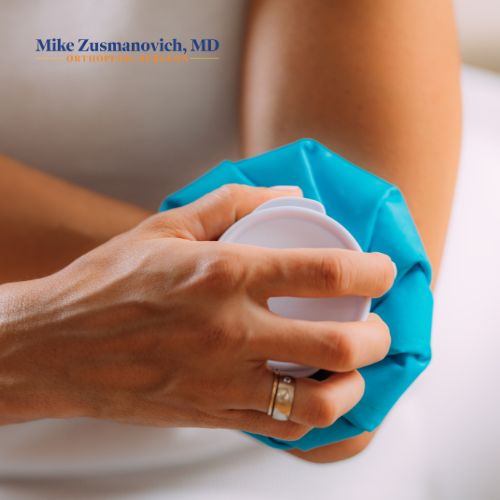
Applying ice to the affected area for 15–20 minutes several times a day can help manage acute inflammation. Over-the-counter nonsteroidal anti-inflammatory drugs (NSAIDs) like ibuprofen or naproxen can reduce pain and swelling during flare-ups. Always consult your doctor before starting any medication regimen.
3. Bracing & Counterforce Straps
A counterforce brace (worn just below the elbow) redistributes forces away from the damaged tendon, reducing strain during activity. A wrist splint may also be recommended to limit forearm muscle activation. Bracing is especially helpful for people who must continue working while recovering.
4. Physical Therapy & Eccentric Exercises
A structured physical therapy program is often the cornerstone of tennis elbow recovery. Eccentric exercises, in which the muscle lengthens under load, have been shown to be particularly effective at remodeling tendon tissue and building long-term resilience. A physical therapist will also address muscle imbalances, posture, and ergonomics that may be contributing to the problem.
5. Corticosteroid Injections
Cortisone injections deliver a powerful anti-inflammatory medication directly to the affected area. They can provide significant short-term pain relief, making it easier to engage in physical therapy. However, repeated use is generally avoided, as it can weaken tendon tissue over time. Steroid injections are best viewed as a bridge to rehabilitation, not a standalone cure.
6. Platelet-Rich Plasma (PRP) Therapy
PRP therapy uses a concentration of your own blood platelets, rich in growth factors, injected into the damaged tendon to stimulate natural healing. Research on PRP for lateral epicondylitis has shown promising results, particularly for patients who haven’t responded to corticosteroid injections. It’s a minimally invasive, biologic option that’s gaining traction in sports medicine.
7. Extracorporeal Shock Wave Therapy (ESWT)
ESWT delivers acoustic pressure waves to the tendon to stimulate healing and reduce pain. It’s a non-invasive procedure typically used for chronic cases that haven’t responded to other conservative treatments. Multiple sessions are usually required, and results can take several weeks to manifest.
8. Dry Needling & Acupuncture
Dry needling involves inserting a thin needle into the tendon or surrounding trigger points to disrupt scar tissue and improve blood flow. Some patients find meaningful relief through this technique, often used alongside physical therapy. Acupuncture has also shown some evidence for reducing pain in chronic tennis elbow.
9. Surgery: Lateral Epicondyle Release
Surgery is considered only when symptoms persist after 6–12 months of consistent conservative treatment. The most common procedure is a lateral epicondyle release, in which the damaged portion of the extensor tendon is removed, and healthy tissue is reattached to the bone.
This can be performed either as an open procedure or arthroscopically (minimally invasive), depending on the extent of the damage. Recovery typically involves a period of immobilization followed by physical therapy, with most patients achieving full recovery within 4–6 months.
How Long Does Tennis Elbow Take to Heal?
Tennis elbow is notoriously stubborn. Without proper treatment, symptoms can persist for months or even years. With a structured, comprehensive approach, most patients see significant improvement within 3–6 months. The key is not giving up on conservative treatment too early, but also not waiting too long to seek an expert evaluation if symptoms aren’t improving.
Can You Prevent Tennis Elbow?
While you can’t always avoid the activities that put you at risk, you can reduce your chances of developing, or redeveloping, tennis elbow:
- Strengthen and stretch your forearm muscles regularly.
- Use proper ergonomics at your workstation; wrist position and mouse type matter.
- Use tools and equipment appropriate for your hand size and grip strength.
- Warm up before repetitive tasks and take regular breaks.
- If you play a racket sport, ensure proper technique and use the right equipment.
- Address early symptoms promptly rather than pushing through pain.
See an Elbow Specialist in West Babylon — Don’t Let Pain Run Your Life
Tennis elbow is more than just an inconvenience; when it interferes with your work, your hobbies, and the simple tasks of daily life, it becomes a quality-of-life issue. The sooner you seek expert care, the more options you have and the faster you can recover.
Dr. Mikhail Zusmanovich is a board-certified orthopedic surgeon and elbow specialist in West Babylon, NY, with fellowship training in orthopedic sports medicine from the Cedars-Sinai Kerlan-Jobe Institute. He treats tennis elbow and other upper extremity conditions with a patient-centered, evidence-based approach, from conservative care to advanced surgical solutions.
His office is conveniently located to treat patients across Long Island, and he is accepting new patients. Whether you’re a carpenter who can’t grip a tool, an office worker with burning forearm pain, or an athlete sidelined by elbow soreness, Dr. Zusmanovich can help you find answers and a path forward.
Call (631) 321-0033 or schedule your appointment online today.
Hear From Our Patients
Discover how patients have successfully returned to their activities after receiving treatment from Dr. Zusmanovich.
West Babylon
🕒Hours
Mon: 8am–8pm
Tue: 8am–5pm
Wed: 8am-5pm
Thurs: 8am-5pm
Fri: 8am-5pm