
Tommy John Surgery Explained: What Every Baseball Player and Parent Should Know
If your son came home from practice with elbow pain, or if you’re a pitcher who felt something give way during a throw, there’s a good chance you’ve already heard the words “Tommy John surgery.” It’s one of the most searched orthopedic procedures in youth and competitive baseball, and for good reason. UCL injuries have become increasingly common at every level of the game, from Little League to the pros.
But despite how frequently it’s discussed, there’s still a lot of confusion about what the surgery actually involves, who truly needs it, and what the road back to the mound really looks like. This page is designed to give athletes and parents on Long Island straight, honest answers.
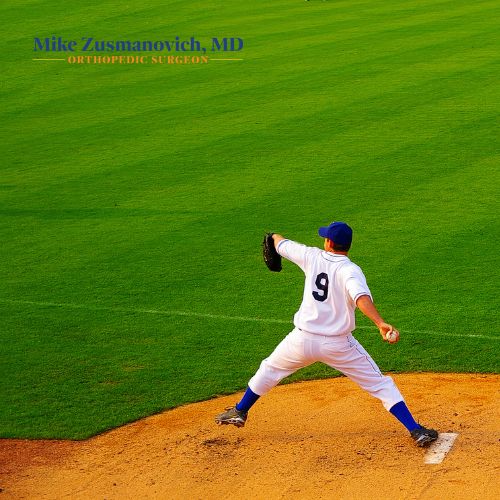
Tommy John Surgery & UCL Treatment
Expert sports medicine orthopedic in Patchogue. Dr. Mikhail Zusmanovich provides advanced UCL reconstruction and elbow treatment for baseball players and athletes of all ages, offering both non-surgical and surgical solutions tailored to each patient’s needs.
What Is Tommy John Surgery?
Tommy John surgery, also known as UCL reconstruction, is a procedure that replaces a torn or damaged ulnar collateral ligament (UCL) in the elbow with a tendon graft from another part of the body. The UCL is a small but critical ligament on the inner side of the elbow that stabilizes the joint during the throwing motion.
The surgery is named after former MLB pitcher Tommy John, who became the first player to undergo the procedure in 1974, under the care of Dr. Frank Jobe. He went on to pitch for 14 more seasons, helping establish UCL reconstruction as a reliable path back to competitive baseball.
Today, Tommy John surgery is one of the most commonly performed procedures in sports orthopedics, and outcomes have improved significantly over the past several decades.
What Is the UCL, and Why Do Throwers Injure It?
The ulnar collateral ligament runs along the inner side of the elbow, connecting the upper arm bone (humerus) to one of the forearm bones (ulna). During throwing, the UCL is placed under enormous stress, particularly at the moment of acceleration, when the arm whips forward to release the ball.
For pitchers, this stress is repetitive and cumulative. Each throw places a load on the UCL that approaches the ligament’s maximum tolerance. Over time, especially in young athletes whose bones and ligaments are still developing, this repeated stress can cause the UCL to fray, partially tear, or rupture completely.
Factors that increase UCL injury risk include:
- High pitch counts and year-round throwing without adequate rest
- Early sport specialization in baseball occurs before the body has fully matured.
- Poor throwing mechanics that place additional stress on the elbow
- Playing through elbow pain rather than seeking early evaluation
- Pitching on multiple teams simultaneously during the same season
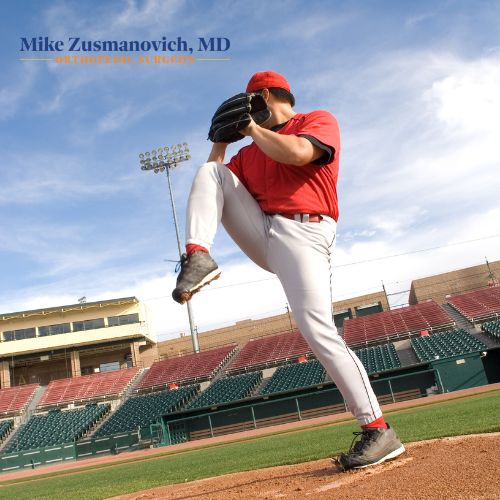
Signs Your Athlete May Have a UCL Injury
UCL injuries don’t always announce themselves dramatically. Some athletes describe a sudden pop and immediate pain during a throw, while others experience a gradual onset of inner elbow pain that worsens over weeks or months. Common signs include:
- Pain or tenderness on the inner side of the elbow during or after throwing
- Decreased velocity or command on the mound
- A feeling of elbow instability or “looseness” when throwing
- Numbness or tingling in the ring and pinky fingers (ulnar nerve involvement)
- A pop followed by sharp pain and inability to continue throwing
If your athlete, or you, is experiencing any of these symptoms, a prompt evaluation is important. Continuing to throw through UCL pain can turn a partial tear into a complete rupture, significantly complicating treatment and recovery.
What Does Tommy John Surgery Involve?
The procedure is typically performed on an outpatient basis under general anesthesia. During surgery, the damaged UCL is replaced with a tendon graft, most commonly taken from the palmaris longus tendon in the forearm, though tendons from the hamstring, foot, or a donor source may also be used. The graft is threaded through small tunnels drilled in the humerus and ulna and secured in place, recreating the function of the original ligament.
The surgery generally takes one to two hours, and patients go home the same day. The new ligament gradually incorporates into the bone over the following months, which is a primary reason why recovery takes as long as it does.
Success Rates and Long-Term Outcomes
Tommy John surgery has an overall success rate of approximately 80–90% for return to the same or higher level of competition in motivated athletes who complete the full rehabilitation process. The majority of pitchers who undergo the procedure and commit to recovery return to throwing, many at the same velocity or higher, in part because the rehabilitation process addresses mechanics and strength deficiencies that may have contributed to the original injury.
That said, not every athlete returns to their pre-injury level, and some experience re-injury. This is why prevention, managing pitch counts, prioritizing rest, and addressing elbow pain early, remains critically important.
How Dr. Zusmanovich Approaches UCL Injuries
As a sports medicine orthopedic in Patchogue, Dr. Mikhail Zusmanovich has extensive experience evaluating and treating UCL injuries in athletes of all ages, from youth baseball players on Long Island to competitive adult throwers. He takes a thorough, individualized approach to every elbow injury, beginning with a comprehensive physical examination and advanced imaging to accurately characterize the tear before making treatment recommendations.
Dr. Zusmanovich will always explore appropriate non-surgical options first and will be direct when surgical reconstruction is the right path forward. His goal is to give athletes and their families the information they need to make confident, well-informed decisions, and to build a recovery plan that gets them back to the sport they love as safely and efficiently as possible.
Hear From Our Patients
Hear from athletes who have returned to peak performance after treatment with Dr. Zusmanovich.