
5 Signs Your Knee Pain Is Serious Enough to See an Orthopedic Doctor
Knee pain is one of the most common reasons adults visit a doctor — and one of the most commonly ignored. Most people assume their knee will eventually feel better on its own. Sometimes it does. But often, what feels like a minor ache today becomes a chronic issue tomorrow, especially when the underlying cause goes undiagnosed.
So how do you know when knee pain is just a temporary nuisance versus a sign of something that needs expert attention?
Here are the 5 clearest signs your knee pain is serious enough to see an orthopedic doctor — and why waiting could make things worse.
1. The Pain Hasn’t Improved After 1–2 Weeks of Rest
Minor knee strains, mild sprains, and everyday overuse pain typically improve within a few days to two weeks of rest, ice, and reduced activity. If your knee pain has been hanging on for longer than two weeks despite cutting back on activity, that’s the body’s way of saying something deeper is going on.
Lingering knee pain can be caused by:
- A meniscus tear that won’t heal without intervention
- Cartilage damage that’s progressively worsening
- An undiagnosed ligament injury
- Early-stage arthritis
- Patellar tendinitis or another tendon issue
Waiting longer often makes the problem harder to treat. Early evaluation gives you the most treatment options.

2. Your Knee Locks, Catches, or Gives Way
If your knee suddenly catches, locks in place, or feels like it might buckle underneath you, that’s not normal — and it’s not something rest will fix.
These mechanical symptoms typically indicate:
- A torn meniscus, with a fragment getting caught in the joint
- A loose body (a small piece of cartilage or bone floating in the joint)
- Ligament instability, often from an ACL or other major ligament injury
- Patellar instability or dislocation
- Advanced cartilage damage
A knee that doesn’t feel stable is at high risk for further injury. Continuing to use it without proper diagnosis can turn a manageable problem into a much bigger one.
3. Significant Swelling That Won’t Go Down
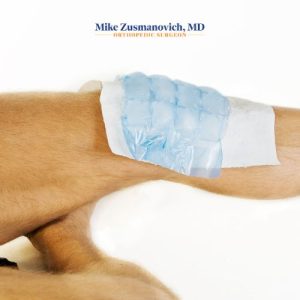
Some swelling is normal after an acute injury or a long day on your feet. But persistent, significant swelling — especially swelling that develops shortly after an injury or won’t go down despite ice and elevation — is a red flag.
Swelling inside the knee joint often indicates:
- Internal bleeding from a torn ligament (most commonly the ACL)
- A significant meniscus tear
- Inflammation from cartilage damage
- An infection (especially if accompanied by warmth and fever)
- A buildup of joint fluid from arthritis or another inflammatory condition
Swelling that persists for more than a few days deserves a professional evaluation. Imaging, like an MRI, may be needed to fully understand what’s happening inside the joint.
4. You Can’t Put Weight on It or Fully Straighten It
If you can’t bear weight comfortably on your knee, can’t fully straighten or bend it, or find yourself limping noticeably, that’s a sign the injury is significant.
Inability to bear weight or move the knee through its full range of motion can mean:
- A fracture in or around the knee joint
- A complete ligament tear (ACL, PCL, MCL, or LCL)
- A displaced meniscus tear blocking motion
- A severe muscle or tendon injury
- A dislocated patella
These injuries don’t resolve on their own. Without proper diagnosis and treatment, they can lead to long-term instability, chronic pain, and joint damage that’s much harder to address later.
5. The Pain Wakes You Up at Night or Affects Daily Activities
Pain that wakes you up at night, makes climbing stairs difficult, or affects normal activities like walking, sitting comfortably, or getting in and out of a car is a sign the problem has moved past the “ignore it and see if it gets better” stage.
Persistent functional pain often indicates:
- Progressive cartilage damage
- Moderate to severe arthritis
- An untreated structural injury that’s gradually worsening
- A complex tear or impingement
- An inflammatory or autoimmune joint condition
Quality of life matters. When knee pain starts dictating how you live, sleep, and move, it’s time to find out exactly what’s going on.

Why Waiting Makes Things Worse
One of the biggest mistakes patients make with knee pain is assuming time alone will heal it. Some injuries do improve with rest. But many — especially ligament tears, meniscus tears, and cartilage damage — don’t get better without proper diagnosis and treatment. In fact, continuing to use a damaged knee often accelerates the underlying problem.
For example:
- A small meniscus tear can progress into a much larger tear with continued use.
- An untreated ACL injury leads to recurrent episodes of instability that damage the cartilage.
- Early arthritis can be slowed dramatically with the right treatment plan — but only if it’s caught early.
- Patellar instability tends to recur and worsen with each dislocation.
The earlier knee pain is properly evaluated, the more treatment options you have — and the better your long-term outcomes.
What to Expect at an Orthopedic Knee Evaluation
If any of the 5 signs above sound familiar, here’s what an orthopedic evaluation typically looks like:
- A detailed history. When did the pain start? Was there a specific injury? What activities make it better or worse? Your story matters as much as the imaging.
- A focused physical exam. A knee specialist will test range of motion, ligament stability, and joint function with specific maneuvers designed to identify the source of the pain.
- Imaging when needed. X-rays are often done on-site. If a soft-tissue injury (ligament, meniscus, or cartilage) is suspected, an MRI may be ordered to provide a complete picture.
- A clear diagnosis and treatment plan. Treatment options range from physical therapy, bracing, injections, and activity modification to advanced, minimally invasive surgical techniques — depending on what your knee actually needs.
The goal isn’t surgery — the goal is getting your knee functioning the way it should. Many patients are surprised to learn how much can be done without surgery when knee pain is caught early.
Don’t Wait — Get Answers
If your knee has been bothering you for more than a few weeks, has any of the warning signs listed above, or is keeping you from the activities you love, you deserve a clear answer about what’s going on. The longer knee pain goes uncared for, the harder it becomes to fully resolve.
A knee specialist in Suffolk County can give you the clarity you need — whether your knee needs an MRI, a targeted rehab plan, an injection, or a more advanced treatment approach.
Schedule a Consultation with Dr. Zusmanovich
If you’ve been searching for a knee specialist in Suffolk County, Dr. Mike Zusmanovich offers expert evaluation and treatment for patients across Long Island. As a Kerlan-Jobe Institute–trained orthopedic sports medicine surgeon with experience as a team physician for the LA Galaxy, LA Angels, Anaheim Ducks, and LA Sparks during fellowship, Dr. Zusmanovich brings elite-level expertise to every consultation — from weekend warriors and high school athletes to active adults dealing with knee pain that just won’t quit.
Contact Dr. Zusmanovich’s office today to schedule a consultation. Your knees support you every day — make sure you’re supporting them, too.